Choosing the right lens can sometimes feel tricky, especially when you’re just starting out. You might be wondering about the difference between a 35mm and a 40mm lens. They sound pretty close, right?
That’s exactly why the 35mm vs 40mm lens question pops up so often for new photographers. Don’t worry, it’s not as complicated as it seems! We’ll break it all down for you step by step so you can feel confident about your choice.
Let’s get straight to what really matters.
Understanding Focal Length
Before we compare the 35mm and 40mm lenses directly, it’s helpful to know what “focal length” means in photography. Think of focal length as how “zoomed in” your lens is. It’s measured in millimeters (mm).
A lower number, like 35mm, means a wider field of view – you can fit more into your picture. A higher number, like 40mm, means a slightly narrower field of view, making things look a bit closer. This difference might seem small, but it can affect how your photos look and feel.
What is a 35mm Lens Good For?


The 35mm lens is a classic for a reason. It’s often called a “storytelling” lens because it captures the world very similarly to how your own eyes see it. It’s wide enough to get a good sense of the scene, but not so wide that your subjects get lost or distorted.
This makes it super versatile.
- Everyday Photography: For daily life, street scenes, and general snapshots, 35mm is fantastic. You can stand relatively close to your subject and still get them in the frame along with their surroundings.
- Street Photography: This is where 35mm really shines. It lets you be close enough to feel the energy of the street while still showing context. You can capture people and their environment naturally.
- Environmental Portraits: If you want to take a picture of someone and show where they are or what they’re doing, 35mm is perfect. It includes enough background to tell a story about the person.
- Travel Photography: When you’re exploring new places, a 35mm lens can capture landscapes, cityscapes, and candid moments without you having to constantly switch lenses.
- Low Light Performance: Many 35mm lenses have wide apertures (like f/1.8 or f/1.4), which means they can gather a lot of light. This is great for shooting in dim conditions or creating a beautiful blurry background (bokeh).
The 35mm perspective feels natural. It’s wide enough to be inclusive but not so wide that it looks stretched or warped. It’s a go-to choice for many photographers because it doesn’t force a specific look on your photos; instead, it lets you frame reality in a very relatable way.
What is a 40mm Lens Good For?

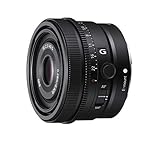

The 40mm lens sits in a sweet spot. It’s just a little bit tighter than a 35mm, offering a slightly more focused view. It’s sometimes called a “nifty fifty” cousin because it’s close to the classic 50mm focal length, which is also very popular for its natural perspective.
A 40mm lens offers a subtle shift that can be very useful.
- Portraits: While 35mm is great for environmental portraits, 40mm is excellent for tighter portraits where you want to focus more on the person’s face and expression without being too close. It avoids the slight distortion that can happen with wider lenses when you’re very near your subject.
- Detail Shots: If you want to highlight a specific subject or a detail within a scene, the 40mm lens helps isolate it a bit more than a 35mm.
- Walk-around Lens: Like the 35mm, it’s a fantastic lens to carry around all day. It’s versatile enough for many situations without being too wide or too zoomed in.
- Still Life and Product Photography: For capturing smaller objects or arrangements, the 40mm provides a pleasing perspective that can make products look attractive.
- A Subtle Difference: The primary appeal of the 40mm is its slight compression and tighter field of view compared to 35mm. This can lead to images that feel a bit more intimate or direct.
The 40mm lens is like a 35mm that’s politely asking things to move just a tiny bit further away. This subtle change makes it ideal for situations where you want a bit more subject isolation but still want to maintain a sense of place in your photos. It’s a fantastic choice if you find 35mm a little too wide for your taste or if you’re aiming for a look that’s just a hair closer to what the human eye perceives at a comfortable viewing distance.
The Key Differences: 35mm vs 40mm Lens
The main difference between a 35mm and a 40mm lens comes down to two things: field of view and perspective. It’s a small numerical difference, but it can change how you frame your shots and the feeling your photos convey.
Field of View
This is the most obvious difference. A 35mm lens will capture a wider area of the scene than a 40mm lens on the same camera. Imagine standing in a room.
With a 35mm, you can see more of the walls, furniture, and people around you. With a 40mm, you’d see a slightly smaller portion of that same room. This is important for different types of photography.
For example, if you’re trying to capture a grand landscape or a busy street scene with lots of elements, the wider 35mm might be more suitable to get everything in. If you’re trying to focus on a single person or a specific object, the tighter 40mm can help eliminate distractions and draw attention to your subject.
Perspective and Compression
This is a more subtle but significant difference. Wider lenses, like 35mm, can sometimes exaggerate the sense of depth and make objects appear further apart than they are. This can be great for creating a dynamic feel in street photography or landscapes.
However, if you get too close to a subject with a very wide lens, you might notice some distortion, especially around the edges of the frame or on the subject’s features.
A 40mm lens, being slightly less wide, offers a bit more “compression.” This doesn’t mean it makes things flat, but rather that the relationship between objects at different distances appears more natural, similar to how we perceive depth with our own eyes. It makes subjects stand out a little more from their background without the potential for distortion that can occur with very wide lenses when shooting up close. This makes the 40mm a very pleasing focal length for portraits and general-purpose shooting where you want a natural look.
Subject Isolation
While both lenses can create a blurry background (bokeh) when used with wide apertures, the 40mm lens will generally offer slightly better subject isolation than a 35mm lens at the same aperture and distance. This is because the tighter field of view of the 40mm lens naturally frames the subject more closely, effectively reducing the amount of background visible.
If your primary goal is to make your subject pop against a soft, blurred background, the 40mm might give you a slight edge. However, the difference is subtle, and a fast 35mm lens (like an f/1.4 or f/1.8) can still produce beautiful bokeh and excellent subject separation.
Practical Use Cases – A Comparison
Let’s look at how these differences play out in real-world shooting scenarios.
| Scenario | 35mm Lens Advantage | 40mm Lens Advantage |
|---|---|---|
| Capturing a wide street scene | Fits more of the environment and action. | Could exclude important contextual elements. |
| Taking a portrait of a friend indoors | Good if you want to show their living space. | More flattering for face shots, less distortion. |
| Documenting a family gathering with people moving | Can capture the lively atmosphere and multiple interactions. | Might feel a bit too “zoomed in” for the whole group. |
| Photographing food at a restaurant table | Can show the dish and the ambiance of the restaurant. | Focuses more directly on the food itself. |
| General walk-around lens for travel | Excellent for landscapes and city views. | A bit more focused on individual sights and people. |
As you can see, neither lens is universally “better.” The choice depends on what you’re trying to photograph and the effect you want to achieve. The 35mm is generally considered more of a wide-angle lens, while the 40mm leans towards a “normal” perspective, similar to how we see.
Who Should Choose Which Lens?
Deciding between a 35mm and a 40mm lens often comes down to your personal shooting style and the subjects you focus on most.
Choosing the 35mm Lens
You might prefer a 35mm lens if:
- You love street photography and want to be immersed in the scene.
- You enjoy capturing environmental portraits where the subject’s surroundings are important.
- You need a wide perspective for landscapes or architecture.
- You prefer a slightly more expansive view for everyday storytelling.
- You’re looking for a classic, versatile lens that works in a wide range of situations.
The 35mm lens encourages you to get closer to your subjects and to be aware of the entire scene. It’s a lens that can tell a full story in a single frame.
Choosing the 40mm Lens
You might prefer a 40mm lens if:
- You primarily shoot portraits and want a natural, flattering perspective.
- You want a lens that offers a bit more subject isolation than a 35mm without being too tight.
- You prefer a field of view that closely mimics human vision for general photography.
- You appreciate a subtle sense of compression that makes subjects stand out.
- You’re looking for a fantastic all-around lens that feels natural and versatile.
The 40mm lens offers a more focused perspective, making it ideal for those who want to draw attention to their subject while still retaining some context. It’s a great choice for a primary lens that can handle many different types of shots with a pleasing, natural look.
Focal Length and Camera Type
It’s also worth considering what kind of camera you’re using. The focal lengths we’ve been discussing (35mm, 40mm) are typically based on a “full-frame” camera. If you’re using a camera with an APS-C sensor or a Micro Four Thirds sensor, the effective focal length will be different due to a “crop factor.”
For example, on an APS-C camera with a 1.5x crop factor, a 35mm lens will behave more like a 52.5mm lens (35mm x 1.5). On the same APS-C camera, a 40mm lens will act like a 60mm lens (40mm x 1.5). On a Micro Four Thirds camera with a 2x crop factor, these focal lengths will be even longer.
This means that on a crop sensor camera, a 35mm lens might actually feel more like a portrait lens, and a 40mm lens could feel even tighter. So, if you’re not using a full-frame camera, you’ll want to factor in the crop factor when deciding which focal length is right for you. Some manufacturers make lenses specifically designed for crop sensor cameras, which might have different markings.
For the purpose of this guide, we’re generally talking about the stated focal length on the lens itself, assuming it’s being used on a full-frame camera or you’re accounting for the crop factor on your specific camera system.
Aperture Matters Too
When comparing lenses, it’s not just about the focal length. The aperture, which is the opening in the lens that lets light through, plays a big role. This is represented by f-numbers, like f/1.8, f/2.8, or f/4.
- Wide Apertures (Small f-number like f/1.8, f/1.4): These lenses let in a lot of light, which is great for shooting in dark conditions and for creating a shallow depth of field. A shallow depth of field means your subject is in focus, and the background is beautifully blurred (bokeh).
- Narrow Apertures (Large f-number like f/8, f/11): These lenses let in less light but allow more of the scene to be in focus, from foreground to background. This is useful for landscapes or when you want everything sharp.
A 35mm lens with a wide aperture like f/1.8 will give you more background blur than a 35mm lens with a smaller aperture like f/4. Similarly, a 40mm lens with an f/1.8 aperture will offer better subject isolation than a 40mm f/4 lens. When comparing 35mm vs 40mm lens, always consider the maximum aperture of the specific lenses you’re looking at.
For example, if you have a 35mm f/1.8 and a 40mm f/2.8, the 35mm will likely offer better low-light performance and more background blur. If you have a 35mm f/2.8 and a 40mm f/1.8, the 40mm might be better in low light and for subject isolation. The aperture rating is just as key as the focal length for achieving different photographic looks.
Is a 40mm Lens Just a “Wider 50mm” or a “Tighter 35mm”?
This is a common way people think about the 40mm lens, and it’s not entirely wrong. It sits right in that comfortable middle ground.
Compared to a 35mm lens, a 40mm lens provides a slightly more “zoomed-in” perspective. It narrows the field of view, making the scene appear a bit less expansive. This tighter view can help you focus more on your subject and can lead to slightly more pleasing compression in portraits, making features look more natural than they might with a wider 35mm lens when shot from a similar distance.
Compared to a 50mm lens, a 40mm lens is wider. A 50mm lens is often considered the closest to human vision in terms of perspective and field of view. The 40mm lens offers a bit more of the scene than a 50mm, making it more flexible for including context or multiple subjects in a shot, while still maintaining a relatively natural perspective without the potential for distortion that wider lenses can sometimes introduce.
So, yes, you can think of it as a bridge. It takes the broad storytelling potential of a 35mm and adds a touch more focus and compression, and it offers a wider, more inclusive view than a classic 50mm lens.
Choosing Your First Prime Lens
If either a 35mm or a 40mm lens is going to be your first prime lens (a lens with a fixed focal length), it’s a great place to start. Prime lenses are often sharper, have wider apertures, and force you to think more about composition because you can’t zoom with your feet.
For a first prime lens, many people find the 35mm to be incredibly versatile, offering a great balance of wide-angle and normal perspectives. It’s excellent for learning composition and how to work with a fixed focal length in various scenarios. The 40mm lens is also an excellent choice, especially if you know you tend to lean towards portraiture or want a slightly tighter, more natural view for everyday shots.
The subtle difference might matter more depending on your photographic interests.
Consider your current photography and what you aim to shoot most often. If you’re drawn to capturing broad scenes and the energy of a place, 35mm is a solid bet. If you find yourself wanting to isolate people or objects a little more, or if you want a lens that feels truly natural for everyday viewing, 40mm could be your perfect match.
Frequently Asked Questions
Question: Which lens is better for portraits 35mm or 40mm
Answer: For portraits, the 40mm lens often offers a more flattering perspective with less potential distortion of facial features compared to the 35mm lens, especially when shooting closer. However, a 35mm lens is excellent for environmental portraits where you want to include the subject’s surroundings.
Question: Is a 35mm lens too wide for general use
Answer: No, a 35mm lens is considered very versatile for general use. It’s wide enough to capture most scenes without feeling cramped, but not so wide that it causes significant distortion for everyday subjects. It provides a natural field of view that’s popular for street, travel, and lifestyle photography.
Question: Does the 40mm lens create more background blur than a 35mm lens
Answer: It depends on the aperture. If both lenses have the same aperture (e.g., both are f/1.8), the 35mm will generally have a slightly wider field of view, meaning more background to blur. However, the 40mm’s tighter field of view can make the background appear larger relative to the subject, contributing to a sense of isolation.
For maximum background blur, look for lenses with the widest possible aperture (smallest f-number).
Question: Which lens should I choose if I can only buy one
Answer: If you can only buy one lens, the 35mm is often recommended as a more versatile all-rounder. It’s great for a wide range of subjects from landscapes to portraits. However, if your primary interest is tighter portraits or a very natural, less wide perspective, the 40mm is an excellent alternative.
Question: How do 35mm and 40mm lenses perform in low light
Answer: Both focal lengths can perform well in low light, but it depends on the lens’s maximum aperture. A 35mm f/1.4 lens will perform better in low light than a 40mm f/4 lens. Always check the maximum aperture of the specific lens you are considering.
Wider apertures (smaller f-numbers) let in more light.
Final Thoughts
The choice between a 35mm vs 40mm lens really comes down to the subtle nuances that matter most to your photography. Both are fantastic focal lengths that offer a great balance for many different situations. If you want to capture a wider scene and be more immersed in your environment, the 35mm lens is your friend.
It’s like telling a full story with your photos, including plenty of context. On the other hand, if you find yourself wanting to bring your subject a little closer, create a more natural-looking portrait, or simply have a perspective that feels very close to how you naturally see, the 40mm lens offers that gentle advantage. Don’t overthink the small difference; try to visualize what you want to photograph most.
Often, either lens will serve you wonderfully, and learning to work within the constraints of a fixed focal length is where the real magic happens. Trust your eye and experiment; your perfect lens is the one that helps you capture the world the way you see it.