Many people get confused when they hear the terms fresnel lens and pancake lens. It can feel like a puzzle trying to figure out which is which and what they are used for. Don’t worry, this is a common question for beginners, and we’re going to break it down easily.
We’ll look at what makes each one special and help you get a clear picture. Get ready for a simple guide that makes sense.
Fresnel Lens Vs Pancake Lens A Clear Look
When you start looking into different types of lenses, especially for things like telescopes, projectors, or even VR headsets, you’ll likely come across two names: fresnel lens and pancake lens. At first glance, they might seem similar, or their names might just sound complicated. But each type of lens has its own unique way of working and specific uses.
Understanding the difference isn’t about memorizing technical jargon; it’s about grasping how light behaves and what makes each design efficient for its job.
Let’s imagine you need a lens. You’re not just looking for something to make things bigger or smaller. You’re looking for something that does a specific task well, often in a compact space or with a particular kind of light.
This is where the unique designs of fresnel and pancake lenses shine. They offer solutions to problems that traditional, thick lenses can’t easily solve. We’ll explore what makes them stand out, why they are chosen for certain applications, and how their construction affects their performance.
What Is A Fresnel Lens
A fresnel lens is a special kind of lens that was invented by Augustin-Jean Fresnel. It’s designed to reduce the thickness and weight of a lens while still keeping its power. Think about a regular, old-fashioned magnifying glass.
It’s usually quite thick, especially in the middle, to bend light and focus it. If you wanted a really powerful magnifying glass, it would be even thicker and heavier. This can be a problem for big lenses, like those used in lighthouses or large telescopes.
A fresnel lens solves this by taking the curved surface of a traditional lens and cutting it into a series of concentric rings. Each ring is like a small, angled prism. Imagine peeling an orange and then stacking the peel segments in a flat circle – that’s a bit like the idea.
These rings all work together to bend light the same way a thick, full lens would, but they use much less glass. This makes them incredibly thin and lightweight, which is why they were first used in lighthouses to cast powerful beams of light over long distances without needing massive, heavy glass.
How A Fresnel Lens Works
The magic of a fresnel lens is in its structure. Instead of one smooth, curved surface, it has many small, flat surfaces arranged in steps around a central point. Each step is angled slightly differently.
When light passes through these angled surfaces, it gets bent, or refracted, in a specific direction. By carefully designing the angles of each ring, the lens can gather light from a wide area and focus it to a single point, just like a normal lens would.
The advantage here is that the bulk of the glass that isn’t needed for bending light is simply removed. This saves material, reduces weight, and can even make the lens easier to manufacture for very large sizes. However, this design isn’t perfect.
Because the surface is made up of many small, flat steps rather than a smooth curve, fresnel lenses can sometimes create more optical aberrations, like chromatic aberration (where different colors of light don’t focus at the same point) and diffraction patterns. This means the image might not be as sharp or as clear as one produced by a high-quality, conventional lens, especially when looking very closely or for applications demanding extreme clarity.
Common Uses For Fresnel Lenses
Fresnel lenses are found in many places because of their ability to be thin and powerful. You’ll see them in:
- Lighthouses: Their original and most famous application, allowing for powerful beams with less weight.
- Overhead Projectors: The large, flat lens that spreads light evenly from the slide to the screen.
- Magnifying Sheets: The thin, flexible magnifying sheets used for reading small print or on maps.
- Solar Concentrators: Used to focus sunlight to generate heat for energy.
- Stage Lighting: To create focused beams of light.
- VR Headsets: In some designs, to help focus the display to your eyes in a compact way.
The key benefit in all these uses is the ability to achieve a strong lensing effect without the bulk and weight of traditional lenses. This makes them ideal for portable devices, large-scale installations, and situations where space is limited.
What Is A Pancake Lens
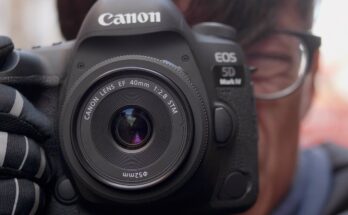
Now, let’s talk about pancake lenses. This is a term used mainly in photography and sometimes in optics for very specific, thin lens designs. A pancake lens is characterized by its extremely short profile, meaning it’s very flat and compact.
It gets its name because its shape is similar to a pancake – short and wide, rather than long and bulky like many standard lenses.
The goal of a pancake lens is to achieve a slim form factor without sacrificing too much in terms of optical quality or functionality. This makes them very attractive for photographers who want to keep their camera bags light or their cameras discreet. They often have a moderate focal length and aperture, making them versatile for everyday shooting.
How A Pancake Lens Works
A pancake lens achieves its slimness through clever optical design. Unlike a fresnel lens which uses segmented surfaces to reduce thickness, a pancake lens typically uses a more conventional arrangement of lens elements, but these elements are specially shaped and arranged to be as short as possible. This often involves using multiple, very thin lens elements that are stacked closely together.
The optical formula for a pancake lens is designed to minimize the overall length of the lens assembly. This means that the distance from the front of the lens to the sensor (or film) is kept to a minimum. While they are thin, they generally aim to provide good image quality, often with sharp centers and pleasing bokeh (the quality of the out-of-focus areas).
Because they are designed for compactness, they might sometimes make compromises in terms of zoom capabilities (they are usually prime lenses, meaning they have a fixed focal length) or extreme wide-angle or telephoto performance.
The optical design is often refined to manage aberrations effectively within the compact space. Engineers work hard to ensure that despite the limited physical dimensions, the lens can still produce sharp, clear images with good color accuracy. This often involves using special glass types and complex internal element shapes.
Common Uses For Pancake Lenses
Pancake lenses are most popular in the photography world. You’ll find them being used for:
- Street Photography: Their compact size makes them less intimidating to subjects and easy to carry around all day.
- Travel Photography: A pancake lens adds minimal bulk to a camera bag, perfect for travelers.
- Everyday Carry Cameras: They allow photographers to have a capable lens attached to their camera without it feeling cumbersome.
- Mirrorless Cameras: Their small size complements the generally more compact nature of mirrorless camera bodies.
- Specific Effects: Some pancake lenses are designed for unique perspectives or selective focus, though their primary appeal is their size.
The main appeal of pancake lenses is their balance of portability and optical performance. They offer a high-quality shooting experience in a package that is easy to live with, day in and day out.
Fresnel Lens Vs Pancake Lens Key Differences
When you look at fresnel lens vs pancake lens, the biggest differences lie in their fundamental design goals and construction. They solve different problems using very different approaches.
| Feature | Fresnel Lens | Pancake Lens |
|---|---|---|
| Primary Goal | Reduce thickness and weight of large lenses for light bending | Achieve a very slim profile for cameras |
| Construction | Concentric rings with stepped, angled surfaces | Multiple, thin, conventionally shaped lens elements stacked closely |
| Light Bending Method | Refraction via angled prism-like surfaces on rings | Refraction through curved surfaces of stacked elements |
| Typical Applications | Lighthouses, projectors, magnifying sheets, solar concentrators | Photography (especially street, travel, everyday cameras) |
| Image Quality | Can have aberrations, not always the sharpest for imaging | Generally good to excellent image quality for photography |
| Size Reduction | Significant reduction in depth for powerful lenses | Significant reduction in overall length/depth of camera lenses |
| Material | Often uses less glass overall for its effect | Uses precisely shaped glass elements |
The fresnel lens is about making a powerful light-bending tool practical by removing bulk through surface segmentation. It’s often about managing large amounts of light or creating strong optical effects where absolute image perfection isn’t the top priority. The pancake lens, on the other hand, is about fitting a high-quality imaging tool into a very small physical package, prioritizing image sharpness and usability for photographers.
Optical Principles At Play
The way these lenses bend light is fundamentally different, even though both achieve a lensing effect. A fresnel lens essentially divides the work of a thick lens into many small, flat prisms. Each facet on the fresnel lens refracts light.
The sum of these refractions from all the facets creates the desired focus or collimation of light. The surface is not continuously curved, which is what allows for the extreme reduction in thickness.
A pancake lens, however, uses the principles of conventional optics but miniaturizes them. It still relies on the curvature of its elements to bend light. The engineers who design pancake lenses use advanced optical formulas and computer modeling to arrange a series of thin, precisely shaped lenses in the shortest possible physical space.
They aim to achieve the same light-bending power and image quality as a larger lens but within a much more constrained volume. This involves careful selection of glass types and element shapes to manage aberrations within the compact design.
Material And Manufacturing
The materials and manufacturing processes for fresnel and pancake lenses are quite distinct. Fresnel lenses, especially large ones, can be made from acrylic or glass. The manufacturing process often involves molding or pressing the material into the ringed pattern.
For very large fresnel lenses, like those used in lighthouses, this process allows for economies of scale and the creation of massive but relatively lightweight optics.
Pancake lenses, being photography lenses, are typically made from high-quality optical glass. Their manufacturing requires precision grinding and polishing of multiple small elements. The assembly of these elements into a compact barrel is a delicate process.
The coatings applied to the surfaces of these elements are also critical for minimizing reflections and maximizing light transmission, which is standard practice for all high-quality camera lenses.
Performance Considerations
When considering fresnel lens vs pancake lens, performance expectations differ greatly depending on the application. Fresnel lenses are excellent for their intended purpose, which is often about directing or concentrating light. However, for imaging applications where extreme clarity and sharp detail are paramount, they can fall short.
The stepped surface can cause diffraction artifacts, and they are more prone to certain optical errors like chromatic aberration. This makes them less suitable for high-resolution photography or detailed scientific observation.
Pancake lenses, conversely, are designed for imaging. They aim to deliver sharp, clear images with minimal distortion and aberration, considering their compact size. While they might not always match the absolute optical perfection of larger, more complex lenses, they offer a superb balance for their intended use.
They are designed to produce pleasing photographic results, capturing detail and color accurately within the constraints of their small form factor.
Choosing The Right Lens For Your Needs
Deciding between a fresnel lens and a pancake lens depends entirely on what you want to achieve. They are not interchangeable, and each excels in its own domain.
If your goal is to:
- Create a powerful beam of light for illumination (like a projector or spotlight).
- Magnify text or objects in a thin, flexible format.
- Concentrate solar energy.
- Reduce the size and weight of a large optical component.
Then a fresnel lens is likely what you need. Its segmented design is perfect for these tasks, offering efficiency in terms of material and weight.
If your goal is to:
- Take photos with a compact, lightweight camera.
- Have a discreet lens for street photography.
- Minimize the bulk of your camera gear for travel.
- Enjoy good image quality in a small form factor.
Then a pancake lens is the ideal choice. Its design prioritizes image quality and usability in a small, portable package.
The context of use is everything. You wouldn’t try to take high-quality portraits with a fresnel magnifying sheet, nor would you use a pancake lens from your camera to power a lighthouse. They are distinct tools for distinct jobs.
Frequently Asked Questions
Question: Are fresnel lenses bad for image quality
Answer: Fresnel lenses can be good for their specific uses, like projecting light, but for detailed imaging, they can introduce some optical issues like blurriness or color fringing, so they aren’t usually the best choice if you need super sharp photos.
Question: Can I use a pancake lens as a magnifying glass
Answer: While a pancake lens is a lens, it’s designed to focus light onto a camera sensor, not to magnify objects for direct viewing like a magnifying glass. Its optical design is specific to photography.
Question: Are fresnel lenses cheaper to make than regular lenses
Answer: For large sizes, yes, fresnel lenses can be cheaper to make because they use less material. For smaller lenses, the manufacturing process for pancake lenses is precise but standard for camera lenses.
Question: Do pancake lenses zoom
Answer: Most pancake lenses are prime lenses, meaning they have a fixed focal length and do not zoom. Their appeal is their compact size and excellent image quality at that specific focal length.
Question: Can a fresnel lens be used in VR headsets
Answer: Yes, some VR headsets use fresnel lenses. Their thinness and ability to bend light effectively are useful for fitting optics close to the eyes in a compact headset design.
Final Thoughts
Looking at fresnel lens vs pancake lens shows us how optical design can be adapted for very different needs. A fresnel lens is a clever solution for reducing thickness in applications where light manipulation is key, like projecting beams or concentrating light, often prioritizing material savings and scale. It achieves its slimness by segmenting a lens surface into rings.
On the other hand, a pancake lens is all about miniaturizing high-quality imaging for cameras. It uses a tightly packed arrangement of conventional lens elements to create a super-compact camera lens that still delivers sharp pictures. The choice between them is clear once you know what job each is built for.
If you need a thin, powerful light bender, think fresnel. If you want a thin camera lens that takes great photos, a pancake is your go-to. Keep these differences in mind, and you’ll easily pick the right tool for your next project or photography adventure.