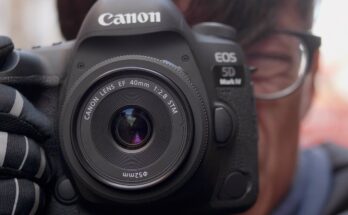
Sometimes when you’re taking pictures, you might wonder about the difference between a macro lens and a regular lens. It can seem a bit confusing at first, especially if you’re just starting out with photography. Don’t worry, it’s a common question! This guide will break down the macro vs normal lens in a way that’s easy to get. We’ll show you what makes them different and when you might want to use each one, making your photo adventures much simpler.
Macro Versus Normal Lens A Clear Look
When you’re looking at camera lenses, you’ll often see terms like “macro” and “normal” or “standard.” These terms describe how the lens behaves, particularly when it comes to focusing and how close you can get to your subject. The main difference boils down to magnification and focusing distance. A normal lens is your everyday workhorse, great for a wide range of shots. A macro lens, on the other hand, is a specialist, designed for extreme close-ups. Understanding this fundamental distinction is key to choosing the right tool for the job and getting the images you want.
What Is A Normal Lens
A normal lens, sometimes called a standard lens, is like the default setting for your eyes. It captures a field of view that looks natural to us, similar to how we see the world without any special magnification or wide-angle distortion. Most photographers start with or frequently use a normal lens because it’s so versatile.
Focal Length And Field Of View
The focal length of a lens determines its field of view. For full-frame cameras, a normal lens typically has a focal length of around 50mm. This focal length provides an angle of view that matches human vision, making it feel very realistic in photographs. It’s not too wide, so it doesn’t distort things, and it’s not too telephoto, so you don’t get extreme compression.
Common Uses For A Normal Lens
Because of their natural perspective, normal lenses are fantastic for a huge variety of photography. They are excellent for:
- Portraits: They render facial features accurately without making them look too close or too far away.
- Street Photography: You can capture scenes as they unfold without being overly intrusive.
- Everyday Snapshots: They are perfect for documenting daily life, events, and travel.
- Documentary Photography: The realistic perspective helps tell a story truthfully.
Normal lenses often have wide apertures (low f-numbers like f/1.8 or f/1.4). This means they can let in a lot of light, which is great for shooting in dimmer conditions and for creating that pleasing blurry background effect, known as bokeh, which helps your subject stand out.
What Is A Macro Lens
A macro lens is a specialized lens built for one thing: getting incredibly close to your subject and capturing tiny details. Think of flowers, insects, textures, or even the intricate parts of a product. These lenses are designed to achieve high magnification ratios, meaning they can make a small subject appear very large on your camera’s sensor.
Magnification Ratio Explained
The key feature of a macro lens is its magnification ratio. This tells you how large the subject will be projected onto the camera sensor compared to its actual size. A 1:1 magnification ratio, which is the standard for true macro lenses, means that the subject is captured at its life-size equivalent on the sensor. For example, if you photograph a ladybug that is 1cm long with a 1:1 macro lens, it will be projected onto the sensor as 1cm long. Lenses with ratios like 1:2 or 1:4 are often called “close-up” or “macro-style” lenses, as they offer magnified views but not true life-size reproduction.
Minimum Focusing Distance
Another critical aspect of macro lenses is their very short minimum focusing distance. This is the closest distance at which the lens can focus. Macro lenses are engineered to focus extremely close, allowing you to fill the frame with very small subjects. A normal lens often has a much longer minimum focusing distance, making it impossible to get as close.
Common Uses For A Macro Lens
Macro lenses are invaluable for photographers who want to capture the fine details that are often missed by the naked eye. Their primary uses include:
- Nature Photography: Capturing insects, flowers, dew drops, and other small natural wonders.
- Product Photography: Showcasing the details of jewelry, watches, electronics, or food.
- Abstract Photography: Focusing on textures, patterns, and shapes.
- Medical and Scientific Photography: Documenting intricate details for research or educational purposes.
- Artistic Detail Shots: Adding unique perspectives to any subject by focusing on its smallest elements.
Macro lenses can sometimes double as excellent portrait lenses, especially those with longer focal lengths (like 100mm or 180mm macro lenses), as they offer sharp images and beautiful background blur. However, their primary strength lies in their ability to magnify the tiny world.
Macro Versus Normal Lens Key Differences
Let’s put the macro vs normal lens side-by-side to highlight their differences. It’s not just about what they look like; it’s about what they can do for your photos.
Magnification
A normal lens is designed for standard magnification, showing subjects at a size that feels natural. A macro lens, however, is built for extreme magnification, allowing you to make tiny subjects appear huge in your image.
Minimum Focus Distance
This is a major differentiator. Normal lenses require you to be a certain distance away from your subject to achieve focus. Macro lenses can focus much, much closer, enabling you to fill the frame with small details.
Optical Design
Macro lenses have a more complex optical design to correct aberrations (distortions or imperfections in the image) that become more apparent at very close focusing distances. This ensures that even when you’re extremely close, your image remains sharp and clear. Normal lenses are optimized for general-purpose focusing distances.
Depth of Field
When shooting macro photography, the depth of field (the range of distance in a photo that appears acceptably sharp) is often very shallow. This means only a tiny sliver of your subject might be in focus. Normal lenses, when used at typical distances, generally offer a greater depth of field, keeping more of the scene in focus. This can be an advantage or disadvantage depending on your creative intent.
Versatility
A normal lens is generally more versatile for everyday shooting, suitable for a wide range of subjects and scenes. A macro lens is a specialist tool; while it can be used for general photography, its true power shines when used for close-up work.
Here’s a quick comparison table:
| Feature | Normal Lens | Macro Lens |
|---|---|---|
| Primary Purpose | General purpose, natural perspective | Extreme close-ups, high magnification |
| Magnification Ratio | Typically less than 1:4 | 1:1 or higher for true macro |
| Minimum Focus Distance | Longer, not designed for extreme close-ups | Very short, optimized for close focusing |
| Depth of Field at Close Range | Generally larger | Extremely shallow |
| Best For | Portraits, landscapes, everyday shots | Insects, flowers, textures, small details |
When To Choose A Macro Lens
If you find yourself constantly wanting to get closer to capture the intricate patterns on a butterfly’s wing, the delicate veins of a leaf, or the tiny details of a piece of jewelry, then a macro lens is likely what you need. It opens up a new world of photography by revealing the beauty in the small things. When your photographic goals involve exploring textures, miniature subjects, or intricate designs, the macro lens is your specialized instrument.
When To Choose A Normal Lens
For most of your photographic needs, a normal or standard lens will serve you exceptionally well. If you want to take pictures of people, landscapes, city scenes, or just everyday moments without a specific need for extreme close-ups, a normal lens is the go-to choice. It provides a balanced view that is easy to work with and produces pleasing results for a broad spectrum of subjects. It’s the versatile lens you can carry around and use for almost anything.
Can A Normal Lens Do Macro Photography
Not really, not in the true sense. While some normal lenses can focus closer than others, they won’t achieve the 1:1 magnification ratio that defines a true macro lens. You might be able to get a bit closer to a subject and capture some detail, but you won’t get that extreme, life-size reproduction of tiny objects. Some lenses are advertised as “macro” but only offer ratios like 1:2 or 1:4, which are great for close-ups but not the same as dedicated macro capability.
Can A Macro Lens Be Used As A Normal Lens
Yes, absolutely! Many photographers use their macro lenses as their primary normal or prime lens. Macro lenses, especially those with focal lengths around 50mm to 100mm, can produce excellent images for portraits and general photography. The sharpness and quality of images from macro lenses are often superb. The only slight consideration is that when you use a macro lens for non-macro subjects, you might need to step back further than you would with a dedicated normal lens to achieve the same framing. However, the optical quality often makes this a worthwhile trade-off.
Frequently Asked Questions
Question: What is the main difference between a macro and normal lens in simple terms
Answer: A normal lens shows things like your eyes see them, good for general pictures. A macro lens lets you get super close to tiny things and makes them look big in your photo.
Question: Can I use a normal lens to take pictures of insects
Answer: You can take pictures of insects with a normal lens, but you’ll have to stay further away and they might look small in your picture. A macro lens lets you get much closer and fill the frame with the insect.
Question: Is a 50mm lens a macro lens
Answer: A 50mm lens is typically considered a normal lens. While some 50mm lenses might have closer focusing capabilities, they usually don’t achieve the 1:1 magnification needed for true macro photography. Dedicated macro lenses are specifically designed for extreme close-ups.
Question: Do I need a macro lens for flower photography
Answer: You can take pictures of flowers with a normal lens, but to capture the really tiny details like water droplets or the texture of petals, a macro lens will give you much better results. It lets you get in very close.
Question: Which lens is better for portraits a macro or normal lens
Answer: For general portraits where you want a natural look, a normal lens is usually preferred. However, longer focal length macro lenses (like 100mm or more) can also make excellent portrait lenses, offering sharp detail and beautiful background blur.
Final Thoughts
Choosing between a macro and a normal lens really comes down to what you want to photograph. If your passion is capturing the grand view, the people around you, or the sweep of a landscape, a normal lens is your versatile companion. It offers that familiar perspective and handles a wide variety of situations with ease, making it perfect for everyday shooting and building your photographic foundation. On the other hand, if the miniature world calls to you, if you’re fascinated by the intricate details of nature, the textures on everyday objects, or the unseen beauty in small subjects, then a macro lens is your key to unlocking those hidden visual stories. It’s a specialized tool that lets you explore the world at a scale most people never see, bringing life and impact to subjects that are often overlooked. You might even find that your macro lens becomes a favorite for regular shots due to its incredible sharpness. Don’t be afraid to experiment with both to see which one inspires your creativity the most and helps you tell your unique visual stories.