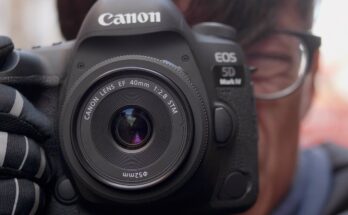
Choosing the right lens for your camera can feel a bit tricky sometimes, especially when you start looking at different types. Many beginners wonder about the difference between a macro lens and a regular lens. It’s a common question because they look similar but do very different things.
Don’t worry, this guide will make it super easy. We’ll break down exactly what each lens is best for, showing you step by step how to pick the perfect one for your next amazing shot. Get ready to see your photos in a whole new light.
Understanding Macro vs Regular Lens
When you’re just starting out with photography, the terms “macro lens” and “regular lens” might sound confusing. You might even wonder if you need both. The basic idea is simple: they are designed for different kinds of photography.
A regular lens is your all-around workhorse, great for many situations. A macro lens, on the other hand, is a specialist, built for capturing tiny details up close.
What is a Regular Lens?
Think of a regular lens as your everyday camera lens. These are the lenses that often come with your camera when you buy it, or they are the ones you’ll find most commonly used for general photography. They are designed to be versatile, covering a wide range of focal lengths and shooting scenarios.
Whether you’re shooting portraits, landscapes, or everyday scenes, a regular lens can handle it.
Regular lenses are categorized by their focal length, which tells you how much of a scene they can capture and how much they can zoom in. These are generally divided into two main types:
- Prime Lenses: These lenses have a fixed focal length. This means they don’t zoom. While this might sound limiting, prime lenses are often sharper and have wider apertures (meaning they let in more light), making them excellent for low-light situations and achieving a beautiful blurred background (bokeh). Common focal lengths for prime lenses include 35mm, 50mm, and 85mm.
- Zoom Lenses: These lenses offer a range of focal lengths, allowing you to zoom in and out without changing lenses. This makes them incredibly convenient for situations where you can’t move your feet easily, like at a sporting event or a crowded concert. Examples include 18-55mm, 24-70mm, and 70-200mm lenses.
The primary purpose of a regular lens is to capture a scene as the human eye might perceive it, or with a slight emphasis on certain elements through focal length choice. They are good at capturing depth of field but generally cannot focus closely enough to fill the frame with very small subjects.
What is a Macro Lens?
A macro lens is a special type of lens that is designed to capture extreme close-up shots of small subjects. The defining characteristic of a macro lens is its ability to focus very close to the subject, allowing you to photograph things like insects, flowers, textures, or tiny details of everyday objects at a 1:1 magnification ratio or greater. This means that the image projected onto your camera’s sensor is the same size as the actual subject.
Imagine trying to photograph a ladybug. With a regular lens, you’d have to stand quite far back, and the ladybug would likely be a small dot in your photo. With a macro lens, you can get incredibly close, and the ladybug can fill the entire frame, revealing all its intricate details.
Key features of macro lenses include:
- High Magnification: The ability to achieve a reproduction ratio of at least 1:1.
- Close Focusing Distance: They can focus much closer to the subject than regular lenses.
- Flat Field of Focus: Macro lenses are designed to keep the subject sharp across the entire frame, which is important for flat subjects like stamps or coins.
- Sharpness: They are typically very sharp, especially at close focusing distances.
While macro lenses excel at close-up work, they can also be used for other types of photography, such as portraits. Some macro lenses have focal lengths that make them suitable for portraiture, offering sharp images and beautiful background blur.
Key Differences: Macro vs Regular Lens
The main distinction between a macro lens and a regular lens boils down to their intended use and their optical design, specifically how close they can focus and the magnification they can achieve. This difference has a significant impact on the types of photos you can create.
Focusing Distance and Magnification
This is the most crucial difference. A regular lens has a minimum focusing distance that is relatively far from the lens. If you try to focus on something too close, the lens will struggle and won’t be able to achieve sharp focus.
For example, a standard 50mm prime lens might have a minimum focusing distance of around 0.5 meters (about 1.5 feet). If you try to get closer than that, your image will be blurry. This is perfectly fine for taking photos of people or landscapes.
A macro lens, on the other hand, is engineered to focus extremely close. True macro lenses achieve a 1:1 magnification ratio. This means that if you photograph an object that is 1 cm long, its image projected onto your camera’s sensor will also be 1 cm long.
This allows you to capture incredible detail that is invisible to the naked eye.
Consider a 100mm macro lens. Its minimum focusing distance might be as short as 0.3 meters (about 1 foot), but at that distance, it can achieve 1:1 magnification. This is the magic of macro photography – bringing the tiny world into sharp focus and making it appear life-size or even larger in your photograph.
Optical Design and Sharpness
Macro lenses are specifically designed to provide maximum sharpness at very close focusing distances. They often incorporate special elements and coatings to correct for optical aberrations that can become more pronounced when shooting up close, such as chromatic aberration (color fringing) and field curvature.
Regular lenses are optimized for sharpness across a wider range of focusing distances. While they are generally sharp, they might not perform as well as a dedicated macro lens when pushed to their absolute closest focusing limits.
When you’re shooting a subject that fills your frame with a macro lens, you want every little detail to be razor-sharp. This is what macro lenses are built for. Regular lenses are built for a more general-purpose sharpness.
Focal Length and Versatility
Both macro and regular lenses come in various focal lengths. You can find macro lenses in wide-angle, standard, and telephoto focal lengths, just like regular lenses.
Macro Lens Focal Lengths:
- Wider focal lengths (e.g., 40mm-60mm): These allow you to get very close to your subject, but you might have to be so close that you risk disturbing it (like a butterfly). They also offer a wider field of view, showing more of the surrounding environment in your close-up shot.
- Standard focal lengths (e.g., 90mm-105mm): These are very popular for macro photography because they offer a good balance between magnification and working distance. You can get close enough for excellent detail while still having enough space between you and your subject.
- Telephoto focal lengths (e.g., 150mm-200mm): These provide a longer working distance, meaning you can photograph subjects from further away while still achieving high magnification. This is ideal for shy insects or wildlife that might be startled by your proximity.
Regular Lens Focal Lengths:
- Wide-angle (e.g., 14mm-35mm): Great for landscapes, architecture, and capturing vast scenes.
- Standard (e.g., 35mm-70mm): Versatile for portraits, street photography, and general everyday shooting.
- Telephoto (e.g., 70mm-300mm and beyond): Used for distant subjects like wildlife, sports, and compressing perspective in landscapes.
While a macro lens can be used for general photography, and some regular lenses can focus closer than others, they are not interchangeable for dedicated macro work. A regular lens simply cannot achieve the magnification and close focusing required for true macro shots.
Aperture and Depth of Field
Both types of lenses have apertures, which control the amount of light entering the camera and the depth of field. Depth of field refers to the area of your image that is in sharp focus.
In macro photography, depth of field can be extremely shallow due to the close focusing distances. Even at smaller apertures (higher f-numbers), only a tiny sliver of your subject might be in focus. This is why macro photographers often use very precise focusing techniques and sometimes focus stacking to ensure critical areas of their subject are sharp.
Regular lenses, especially those with wide apertures (low f-numbers like f/1.8 or f/1.4), are excellent for creating a shallow depth of field for portraits, blurring the background and making your subject stand out. For landscapes, you’ll often use smaller apertures (higher f-numbers like f/8 or f/11) to keep more of the scene in focus.
The aperture also affects how much light the lens can gather. A wider aperture on a macro lens can be helpful in low-light macro situations, but it also contributes to that very shallow depth of field.
When to Use Which Lens
Understanding the strengths of each lens type will help you decide when to reach for your macro lens versus your regular lens.
Using Your Regular Lens
Your regular lens is your go-to for a vast array of photographic needs:
- Portraits: Standard and telephoto focal lengths are excellent for flattering portraits, separating your subject from the background.
- Landscapes: Wide-angle lenses are perfect for capturing expansive views, mountains, and seascapes.
- Street Photography: Versatile zoom lenses or standard prime lenses allow you to capture candid moments in urban environments.
- Travel Photography: A zoom lens covers many situations, from wide cityscapes to distant landmarks.
- Everyday Shots: For general snapshots, family gatherings, or documenting daily life, a regular lens is all you need.
- Group Photos: Wide to standard focal lengths are usually best for capturing groups of people.
The key is that for these subjects, you’re usually capturing them at a normal viewing distance, or you want to emphasize a broader scene rather than intricate tiny details.
Using Your Macro Lens
The macro lens shines when you want to explore the miniature world:
- Insects and Spiders: Capture the incredible patterns on their wings or the texture of their bodies.
- Flowers and Plants: Photograph the delicate details of petals, stamens, and dew drops.
- Product Photography (Small Items): Showcase the fine craftsmanship of jewelry, watches, or intricate designs on small products.
- Textures: Capture the detailed patterns of fabrics, wood grain, ice crystals, or even skin.
- Food Photography (Details): Highlight the fresh ingredients or intricate plating of small food items.
- Abstract Photography: Explore patterns and forms found in everyday objects when viewed up close.
Essentially, if you find yourself wanting to get incredibly close to a small subject and fill your frame with its details, a macro lens is your best friend.
Can a Regular Lens Do Macro Photography?
This is a common question. The short answer is: not true macro photography, but you can get closer than usual with some regular lenses.
Some regular lenses have a “macro” or “close focus” setting, or simply a shorter minimum focusing distance than others. These lenses can allow you to get relatively close and achieve decent magnification, but they typically won’t reach the 1:1 reproduction ratio that defines a true macro lens.
Here are some ways to get closer with non-macro lenses:
- Close Focusing Distance: Some regular lenses just have a good minimum focusing distance. Check your lens’s specifications.
- Extension Tubes: These are hollow tubes that fit between your camera body and your lens. They effectively increase the distance between the lens and the sensor, allowing the lens to focus closer and achieve higher magnification. They don’t have any glass, so they don’t degrade image quality, but they do reduce the amount of light entering the camera.
- Close-up Filters (Diopters): These are screw-on filters that act like a magnifying glass for your lens. They are more affordable than extension tubes, but they can sometimes reduce image sharpness and can cause aberrations, especially at the edges of the frame.
- Reversing Rings: For advanced users, a reversing ring allows you to mount a lens backward onto your camera body. This provides extremely high magnification but means you lose all electronic control of the lens (aperture, focus), and it can be tricky to use.
While these methods can help you get closer, they are usually workarounds. For dedicated, high-quality macro photography, a true macro lens is the best tool for the job.
Choosing Your First Macro Lens
If you’re looking to get into macro photography, here’s what to consider when picking your first macro lens:
Focal Length
As mentioned before, focal length impacts your working distance. A longer focal length (e.g., 100mm or more) is generally better for beginners because it gives you more space between the lens and your subject, making it easier to get the shot without disturbing insects or casting shadows.
Magnification Ratio
Aim for a lens with at least a 1:1 magnification ratio for true macro capabilities. Some lenses offer ratios like 1:2, which means the subject appears half its actual size on the sensor. While still good for close-ups, 1:1 is the standard for macro.
Brand Compatibility
Ensure the lens is compatible with your camera’s mount. Most major brands (Canon, Nikon, Sony, Fujifilm, etc.) have their own macro lenses, and there are also third-party options from companies like Sigma and Tamron.
Budget
Macro lenses can be an investment. Consider your budget and whether you’re looking for a new or used lens. Sometimes, older macro lenses can be found at good prices and still perform very well.
Additional Features
Some macro lenses offer image stabilization, which can be helpful for handheld shooting, especially with longer focal lengths. However, for extreme macro, a tripod is often essential regardless of stabilization.
Comparing Lenses: A Table
Here’s a simple comparison to help visualize the differences:
| Feature | Macro Lens | Regular Lens |
|---|---|---|
| Primary Use | Extreme close-ups, detailed shots of small subjects | General photography, portraits, landscapes, everyday scenes |
| Minimum Focus Distance | Very short (allows for high magnification) | Relatively longer (cannot focus on very close subjects) |
| Magnification Ratio | Typically 1:1 or greater | Less than 1:1 (often 1:4 or 1:5 for close focus) |
| Optical Design | Optimized for sharpness at close distances, flat field | Optimized for sharpness across a wider range of distances |
| Depth of Field at Close Focus | Extremely shallow | Less shallow than macro at similar close focus (if possible) |
| Versatility for Macro | Excellent | Poor to fair (without accessories) |
| Versatility for General Use | Good (especially longer focal lengths) | Excellent |
Frequently Asked Questions
Question: Can I use a macro lens for regular photography like portraits?
Answer: Yes, you absolutely can! Many macro lenses, especially those with longer focal lengths like 90mm or 100mm, are excellent for portraits. They tend to be very sharp and can produce beautiful background blur, making your subject stand out nicely.
Question: Is a macro lens much heavier than a regular lens?
Answer: Not necessarily. The weight of a lens depends more on its construction, focal length, and aperture. While some specialized macro lenses might be a bit bulkier due to their optical design, many are comparable in weight to regular lenses of similar focal length and build quality.
Question: How close can a macro lens focus compared to a regular lens?
Answer: A true macro lens can focus extremely close, often achieving a 1:1 magnification ratio, meaning the subject appears life-size on your camera’s sensor. A regular lens has a much longer minimum focusing distance, so it cannot get nearly as close to the subject and achieve that level of magnification.
Question: Do I need special lighting for macro photography?
Answer: While not always required, special lighting like a ring flash or macro twin-lite can be very helpful. Shooting close-up often means the lens itself can block ambient light, so adding your own light source helps ensure your subject is well-lit and sharp, especially when using small apertures.
Question: If I buy a macro lens, does that mean I don’t need my regular lens anymore?
Answer: No, you will still need your regular lens! A macro lens is specialized for close-up work. Your regular lenses (like zooms or primes) are still essential for their versatility in capturing wider scenes, portraits from a distance, landscapes, and general photography that a macro lens isn’t optimized for or as convenient for.
Final Thoughts
Deciding between a macro lens and a regular lens comes down to what you want to photograph. Your regular lens is your dependable companion for capturing the world around you at normal viewing distances, excelling at landscapes, portraits, and everyday moments. It’s built for versatility and broad application.
On the other hand, the macro lens is your key to a hidden universe, revealing intricate details in small subjects that the naked eye often misses. Its specialized design allows for incredibly close focusing and high magnification, transforming the minuscule into magnificent.
Think about your photographic interests. If you’re drawn to the small wonders of nature, the textures of everyday objects, or the fine details of products, investing in a macro lens will open up a whole new creative avenue. However, if your passion lies in capturing expansive views or framing people beautifully from a comfortable distance, your existing regular lenses are likely sufficient and already well-suited for those tasks.
Many photographers find value in owning both, using their regular lenses for general shooting and their macro lens to explore the miniature world. Consider trying out different focal lengths for macro, especially longer ones like 100mm, as they offer a good balance of magnification and working distance for beginners.